Summit 7Tag Archive -

But…Why Are You Here?

Summit

It is the question behind the questions.

Random Stranger: Do you have kids?

Me: Nope. I’m single. And childless.

Random Stranger: Ohhhh, what do you do?

Me: I work for Thomas Nelson. I do Corporate Communications.

Random Stranger: So, you are here for work?

Me: No, I actually took vacation to come. I am blogging for the conference.

Random Stranger: You blog? What is your blog about? Is it an adoption or advocacy blog?

Me: No, it’s not an adoption or advocacy blog. It’s about little of this, a little of that, mostly my random musings on life.

I know exactly what they are trying to make sense of. The question behind the questions. Why am I, of all people, at the Christian Alliance for Oprhans Summit? It is actually a question that I have been sorting through as well.

The Summit was my second orphan care conference. Yet, I still have no answers from people, or more importantly from God, on what I should be doing to help with this issue that is breaking my heart. Only some wonderful new friends and a piles of information on how passionate individuals are making a difference, changing the lives of children around the world, and living out the Gospel.

I had a great couple of days at the Summit. And as for the question behind the question, I’ll let you know as soon as I have the answer we’re both looking for.

Have you ever asked yourself, why am I here?

“When Helping Hurts, Part 2″

Relief: Immediate and temporary emergency aid in which a provider does something for a passive recipient. The Good Samaritan is a great example of a relief effort.  There is a provider and a receiver. When people are helpless, relief is the appropriate intervention. Relief is a handout of material resources. Once the bleeding has stopped, we need to rehabilitate or restore people to previous conditions.

Rehabilitation: Restoring people and communities to their pre-crisis conditions.

Development: The process of ongoing change that is moving people closer to being in right relationship with God, self, others, and the rest of creation. Development is not done to people or for people, but WITH people. The key dynamic is promoting an empowering process. This will typically be done around, or result in, some products or project.

It is harmful to do relief when the situation calls for development. But it takes a lot of time to do the proper approach. And we need to seek to do relief and rehabilitation as developmentally as possible.

Maintain a core focus. It is difficult for the same person/organization to do relief and development with the same community.  You create a dynamic that is hard to change.

Find your niche. What are other organizations doing in your neighborhood? What are their primary needs?  What are your skills? Fill in the missing gaps.

The vast majority of organizations do relief. Yet the vast majority of people in the world are in need of development. One reason organizations opt for relief work is that donors like quantitative, measurable, material things. Donors don’t typically want to hear about relationships. Once the relationships are in place, the rest is just the details. Jesus himself engaged in highly relational ministry.

Avoid paternalism, habitually providing resources or assuming tasks a person can provide or do for themselves.

Asset-Based Development – Identify what is there. Focus on what is there. Mobilize what is there.  Focuses on the capabilities, skills and resources of the person or community.

Assesses existing resources using “asset inventorying.” This is the first step.  What gifts, materials, resources, do you have? Let’s list them all. When you ask a person who has felt like they have no value, what are your gifts and abilities, you are alleviating poverty. The question in itself is poverty alleviation.

Blueprint Development vs. Participatory Development

Blueprint Development: Pre-packaged solution imposed upon poor people. It does it TO them and acts UPON them. McDonald’s franchising meets poverty alleviation. Can intensify marred identity/God-complex.

Participatory Development: More of a learning process approach. It works WITH them, including poor people as full participants in the selection, planning, execution, and evaluation of the intervention. Can help to eliminate the marred-identity/God-complex dynamic. This is a slow process of learning together.

Participation is not just a means to an end, but a valid end in itself.

Do you find yourself championing, giving to, supporting organizations who do relief work, rehabilitation work, or development work?

“When Helping Hurts”

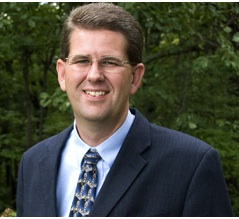
Brian Fikkert

Dr. Brian Fikkert is a Professor of Economics and the founder and Executive Director of the Chalmers Center for Economic Development at Covenant College. Dr. Fikkert earned a Ph.D. in economics from Yale University, specializing in international economics and economic development. He has been a consultant to the World Bank and is the author of numerous articles in both academic and popular journals. Prior to coming to Covenant College, he was a professor at the University of Maryland—College Park and a research fellow at the Center for Institutional Reform and the Informal Sector. He co-authored When Helping Hurts with Steve Corbett.

17 If anyone has material possessions and sees a brother or sister in need but has no pity on them, how can the love of God be in that person? 18 Dear children, let us not love with words or speech but with actions and in truth. 1 John 3:17-18

We have to pour ourselves out on behalf of the hungry. We have to do something. The question is how do we do it.

Questions we ask before we donate:

  1. Where is the money going? How much is going to overhead vs. actually helping?
  2. What accountability is in place?
  3. Is the gospel being shed?
  4. Are the real needs of the community being met or is it just feel good?

But we should be asking this one:

  1. How does the ministry answer…what is poverty?

The way that we define poverty determines the solutions we propose to solve it.

Human beings are relational. They are wired for relationships. It is out of these relationships that we create culture, art, and business. The fall distorts all key relationships (self, others, creation, and God). And poverty is rooted in broken relationships. The fall has also lead to a society of people who are prideful, self-centered, workaholics. They deny God’s existence, power and truth.

We are all poor because none of us are experiencing the fullness of relationships as God intended. Until we embrace the message that we stink, our efforts will do more harm than good. Our mantra should be, “You are not okay, I am not okay, but God is okay.” The good news of the gospel is that we bring nothing to the table, but God loves us anyway.

Good intentions are not enough. You can actually hurt poor people. People go off about Obama and the US government giving money to the poor, but the Church needs welfare reform.

Fundamental Equation for Hurting when Helping:

Material Definition of Poverty + God Complexes of Materially Non-Poor + Feelings of Inferiority of Materially Poor = Harm to both Poor and Non-Poor

I need Jesus Christ to rescue me from me. From my pride, from my need for accomplishment, and from my motives to solve the problem of poverty.

What’s the first step in poverty alleviation? Repentance. Of material understanding of the world.  (Not just our desire for things, but that we view the world in material things.) Of our pride and God-complexes. Of the “health and wealth” or the “prosperity” Gospel.

19 For God was pleased to have all his fullness dwell in him, 20 and through him to reconcile to himself all things, whether things on earth or things in heaven, by making peace through his blood, shed on the cross. Colossians 1:19-20

Poverty alleviation is about reconciling relationships: a process in which people – both the materially poor and ourselves – move closer to living in right relationship with God, self, others, and the rest of creation.

The verbal proclamation of the gospel of the Kingdom of God is central to poverty alleviation. The local church has a vital role to play because it is the body, bride, and fullness of Christ. We must address broken systems and individuals. When working at the individual level, it’s about people and relational processes, not projects and products.

How do you define poverty?

“Mentoring America’s Fatherless”

Sowers

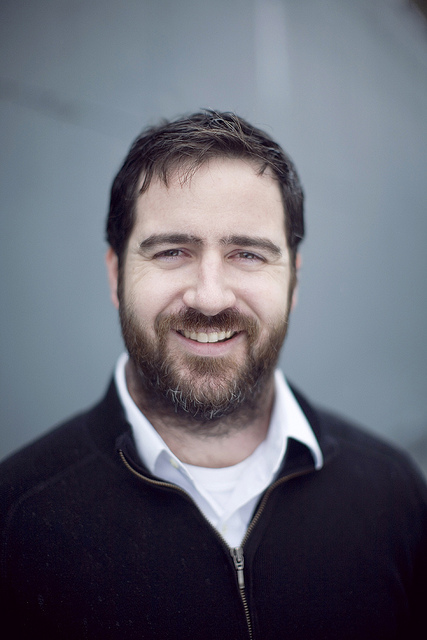
John Sowers, The Mentoring Project

The Mentoring Project is an advocacy and training organization that serves as a liaison between faith communities and matching agencies to provide mentors for fatherless youth.

Fatherless youth are the engine that is driving a lot of society’s problems (gang violence, teenage pregnancy, etc.). We must see the bigger picture of fatherlessness. And we need to open our eyes to the orphans that are in our communities.

How do we respond to a culture crying out to need the love and acceptance of our fathers?

We have to hear it. We need to mourn with those who mourn. We must see the burden and the opportunity.

Mentoring can mean so many things. For The Mentoring Project, it is about reaching the fatherless youth. They focus on boys because that is where the largest need is. They believe in building relational capital.  They partner with churches for implementation.

Base mentoring on 3 Biblical principles:

  1. Love – What does it mean to love a kid that you have just met? Rejection is the central defining characteristic of the fatherless generation. They know rejection more than they know love. Acceptance and presence is the remedy to that. Love is as simple as showing up. This is also central to Christianity. “I will be with you.” We know God’s love because we know He is with us.
  2. Model – We model Christ with integrity and sincerity. Integrity can be intimidating. Sincerity feels attainable. Sincerity makes you vulnerable and approachable.
  3. Coach – Coach with grace and truth. Speaking words of truth and changing their destinies.

We are an Esau generation longing for the blessing of our father. But our fathers are gone.

How do you define mentoring?

“The Plight of the Trafficked Orphan”

tom_davis-1

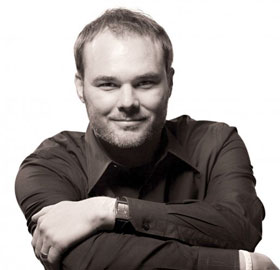
Tom Davis, Children’s Hope Chest

HopeChest is a thriving international ministry to orphans, connecting them to the life transforming power of community-based relationships with Christians in the U.S. and Canada.

Trafficking is quickly becoming the biggest crime business in the world, replacing drugs and arms.

“The thief comes to steal, kill, and destroy.” John 10:10

3 Reasons Traffickers Target Orphans

They are easy prey.

There is a limited support system. So rare for police to get involved because no one cares. End up in unmarked graves “unknown boy” or “unknown girl”.

They are very impressionable, gullible. They truly believe this is their way out, this is their break.

3 Ways to Stop Trafficking

Prevention: The foundation is healthy relationships…through our engagement with orphans, and creating healthy indigenous environments. Average cost is $25-30/month over prolonged period of time (Child Sponsorship Model).

Rescue: Coming in and saving children from traffickers. Average rescue costs $7,500 per child.

Restoration: Therapy programs. Restricting rescues because there are not enough places to send kids. Average costs are $1,000 per month for 24-36 months.

We need to build healthy ongoing relationships with orphans to prevent spiritual and emotional depravity that often leads to trafficking.

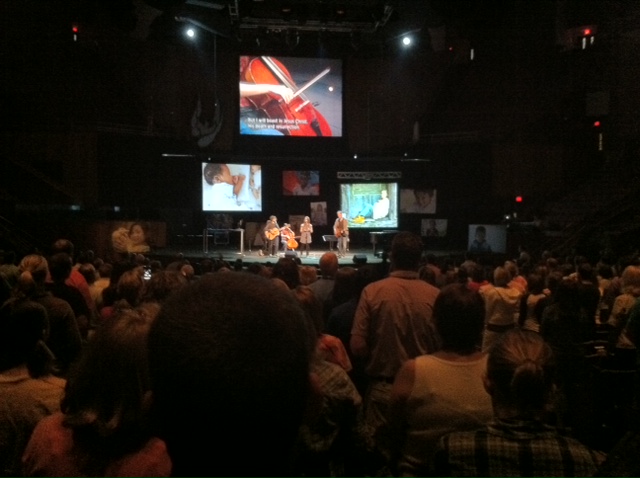
Opening Session, CAFO Summit

Jedd Medefind (Christian Alliance for Orphans)

It is not about just taking up another cause. A gospel-fueled love for Orphans entails:

  1. When the going gets tough, duty, guilt, and enthusiasm are not enough. We need to be people connected to the Source.
  2. 2. When we choose to love the orphans, when we open our homes, when we break into our safety accounts to give, we are forced to give up our false Gods.
  3. We must reflect the story of how we have been taken into God’s family.

Florence Muindi (Life in Abundance International)

We thought our hands were full but God helped us realize a deeper kingdom opportunity.

“I saw children that were in desperate need but children that were equally loved by God. In those children, I saw the face of Christ. I was ashamed, convicted, and changed. I realized I had to respond. I battled for several days. Then I realized I needed to do things differently, I needed to utilize the local church– decreasing myself, so Christ can be lifted up. I needed to craft a response that was both curative and God dependent.”

God cares about how we help. We need to spend time in prayer not just about the what, but about the how.

We are called to love God with all our heart, soul, and mind. If we employ our mind in this response, we will see that communities of children are broken. Dealing with a child is only dealing with an outcome. We need to address the system that is producing orphans.

Together we can move past the initial response and get into the transformation process. This would look like restoring children AND empowering the destitute, mending the care and support systems of a community, and aiding in development.

Dennis Rainey (Family Life Today) interviewing Carolyn Twietmeyer (Project Hopeful)

“Growing up I never could reconcile why there were people who needed so much and we had extra to share, but we weren’t.”

Carolyn had 4 children. She and her husband had 3 more together. Then they adopted 3 from Ethiopia, one with HIV. While in Ethiopia, met another girl with HIV whose health was rapidly deteriorating. Went back to get her. Then adopted her brother and sister. This Easter they adopted a little girl with Downs Syndrome.

Not independently wealthy and her husband Kyle makes $64,000. Took extra mortgage on their home. Got no grants. She believed that God is going to pay for the adoption. She didn’t know how, but she acted in faith. Found out while in Ethiopia, someone made an anonymous donation of $20,000 for their adoption.

Russell Moore (Southern Seminary)

We are afraid of orphans. Because orphans are unpredictable. There is always some kind of tragedy. We would rather not think of such things. We are afraid of the mark left on the victims of tragedy.

God, in his adopting power thru Jesus, has brought us into his family. We reach orphans as ex-orphans ourselves.

As we move into the dangerous we places, we empower others to live courageously. What do we have to be afraid of anymore? Jesus has given us a path. When we love in the sad, dark, haunted places; children who we are afraid of, we follow Jesus there.

Christian Alliance For Orphans Summit

summit_vii_banner_-_square

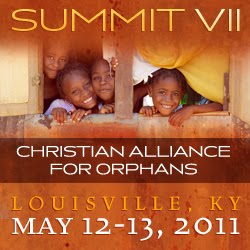
For the next couple of day, I am in Louisville, Kentucky at Southeast Christian Church at the Christian Alliance for Orphans Summit (aka #summit7). The Summit brings a wide variety of people who are orphan advocates. As Brett Devries said in his opening comments,

We are called together to inspire, equip, breathe life into the church so they can go out and care for orphans.

Just wanted to give you a heads up before I flood you with notes from the conference. I hope you will take a few minutes to scan through them and see if there any topics that interest you.

You will quickly see that orphan advocacy is more than a conversation about adoption. It is also a conversation about legislation, foster care, mentoring, trafficking, supporting indigenous cultures and families, and most importantly emulating God’s love for us.

Thank you for following along on this journey. If you would like to follow others who are passionate about this issue, be sure to check out the conversation on twitter.

What do you know about orphan advocacy?